
Product Description
ABOUT US
HangZhou Suijin machinery Technology Co,.Ltd is a profational manufacturer in HangZhou city, our main process is investment casting/precision casting and machining, for casting process, we have 2 kinds of production line, 1 is precision casting, another is water glass with competitive cost.
Apart from the investment casting workshop and machine workshop, we also provide the CHINAMFG parts to meet the requirement for varial demand from our customer.
CERTIFICATIONS
Our company got the ISO9001 and IATF16949 certification, and aslo we are awarded the new high-tech enterprice by Chinese government, and we have more than 20 patent.
ADVANTAGES
• More than 10 years experience on casting and machining
• Advanced inspection equipment to ensure the tolerance
• Flexible PO QTY to meet customer demand
• Professional engineers in casting and machining
• Competitive price and exllent parts quality
• Nearby HangZhou port, on-time delivery
PROCESS FLOW
OEM&ODM SERVICE
HangZhou suijin machinery technology can provide the ODM&OEM service for customer, and main is ODM, we can manufacturing the customized parts according to 2D&3D, we have professional R&D team can take part in ealier development phase of the project.
AVALIABLE MATERIA & SURFACE TREATMENT
| Avaliable Material | |||
| Carbon Steel | Alloy Steel | High Chromium Cast Iron | Low carbon steel |
| Stainless Steel | Duplex Stainless Steel | Steel bar | Ductile Cast Iron |
| Surface treatment | |||
| Heat Treatment | Zinc Coating | Blackening | Mirror Polishing |
| Satin Polishing | Electrolytic Polishing | Shot Peening | DACROMET |
PRODUCT APPLICATION
AUTO PARTS
• Exhaust inlet/outlet cone • Shift sleeve • Fuel rail bracket
• Tempreture sensor boss • Mounting Brackets • Oxygen sensor boss
• Brake balance block • EGR sensor boss • Exhaust valve body
ARCHITECTURAL HARDWARE
• Mounting Base • Mounting plate • Bearing Covers
• Coupling • Grount sleeve • Sprockets
• Handle • law glass curtain wall accessories • Side Plates
AGRICULTURAL MACHINERY PARTS
• Tooth Blocks • Track shoes • Bucket Teeth
• Track Links • Clamping • Mounting Brackets
• Lifting Eyes • Quick Joint • Trencher Tooth
MARINE HARDWARE
• Star handle • Door hinge • Folding Dock Cleat
• Mirror Polished Mooring • Hollow base boat rope cleat • Mounting Brackets
VALVE/PUMP
• Valve body • Explosion-proof valves • Pipe fitting
OTHERS
The casting part is wildly use in the industries, such as rail&transit parts, bicycle parts, casting impeller, food machine sorting components, solar mounting system parts, container safety parts, Electronic lock body, robot parts and so on, we have more than 20 patents related to this kinds of project in production.
ADVANCED EQUIPMENTS
Our company also equiped advance inspection equipment to meet the inspection requirement of the parts, so that we can sure the part can have a good quality.
MAIN EQUIPMENT LIST
| Magnetic defect inspection | Spectrometer | HB hardness inspection | Mechanical inspection |
| Ultrasonic defect inspection | Roughness tester | HR hardness inspection | CMM inspection |
| Metallographic detector | X-ray inspection | Dye penetrant inspection | 100% Thread inspection |
FAQ
| Q1 | Are you factory or trading company? |
| A1 | We are factory located in HangZhou city, China |
| Q2 | What kinds of language is avaliable? |
| A2 | English, Chinese, except email cummunication, we are ok with video meeting and calling. |
| Q3 | How should I place an order? |
| A3 | We are receive the PO and production drawing by email. |
| Q4 | Which shipping methed is ok for you? |
| A4 | Normally shipping by sea and train is use for mass production order delivery. DHL,TNT,FedEx, UPS,EMS air shipment is use for sample delivery. |
| Q5 | How can I contact you? |
| A5 | You can contact us by email, and also we can chat by Skype, Teams, WhatsApp, Facebook. |
| Q6 | What kinds of drawing format can be use? |
| A6 | PRO/E, Auto CAD, CHINAMFG Works, IGS, UG, CAD/CAM/CAE, STEP. |
| Q7 | Which packing material do you use for sea shipping? |
| A7 | For sea shipping, we will packaging with European standard wooden pallet. The parts will packing with PE bag inside the carton box. |
| Q8 | How do you deal with the RFQ? |
| A8 | Sales receiving the RFQ—Feasiblity study meeting with R&D engineer—Feed back technical issues with Customer—Sales quoted |
/* March 10, 2571 17:59:20 */!function(){function s(e,r){var a,o={};try{e&&e.split(“,”).forEach(function(e,t){e&&(a=e.match(/(.*?):(.*)$/))&&1
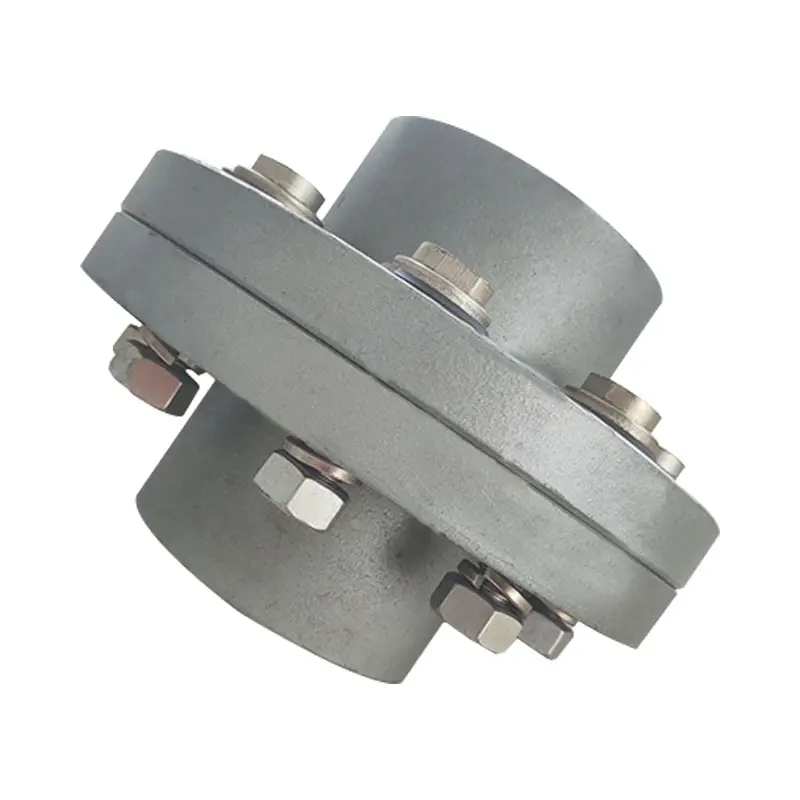
What Industries Commonly Use Flange Couplings for Power Transmission?
Flange couplings are widely used in various industries for power transmission due to their reliability and versatility. Some of the common industries where flange couplings are employed include:
1. Manufacturing: In manufacturing industries such as automotive, aerospace, electronics, and consumer goods, flange couplings are utilized in machinery and equipment to transmit power between different components.
2. Oil and Gas: The oil and gas industry often uses flange couplings in pumps, compressors, and turbines for power transmission in exploration, extraction, and refining processes.
3. Chemical and Petrochemical: Flange couplings are used in various equipment within the chemical and petrochemical industry, including mixers, agitators, and pumps, to transfer power efficiently.
4. Mining and Construction: Heavy-duty machinery in mining and construction applications relies on flange couplings to transmit power in demanding and challenging environments.
5. Power Generation: Power plants, including thermal, hydroelectric, and wind power facilities, use flange couplings in turbines, generators, and auxiliary systems for power transmission.
6. Marine: In the marine industry, flange couplings are utilized in propulsion systems, winches, and other equipment that requires power transmission in marine vessels.
7. Steel and Metal Processing: Steel mills and metal processing plants use flange couplings in various equipment, including rolling mills and conveyor systems.
8. Food and Beverage: The food processing and beverage industry use flange couplings in mixers, pumps, and conveyor systems to handle power transmission in hygienic environments.
9. Pharmaceutical: Pharmaceutical manufacturing equipment employs flange couplings for power transmission in processes such as mixing, granulation, and tablet compression.
10. Water and Wastewater: Flange couplings are used in water treatment plants and wastewater facilities to transfer power in pumps and other equipment.
These are just a few examples, and flange couplings are found in many other industries where reliable power transmission is essential for smooth operations.
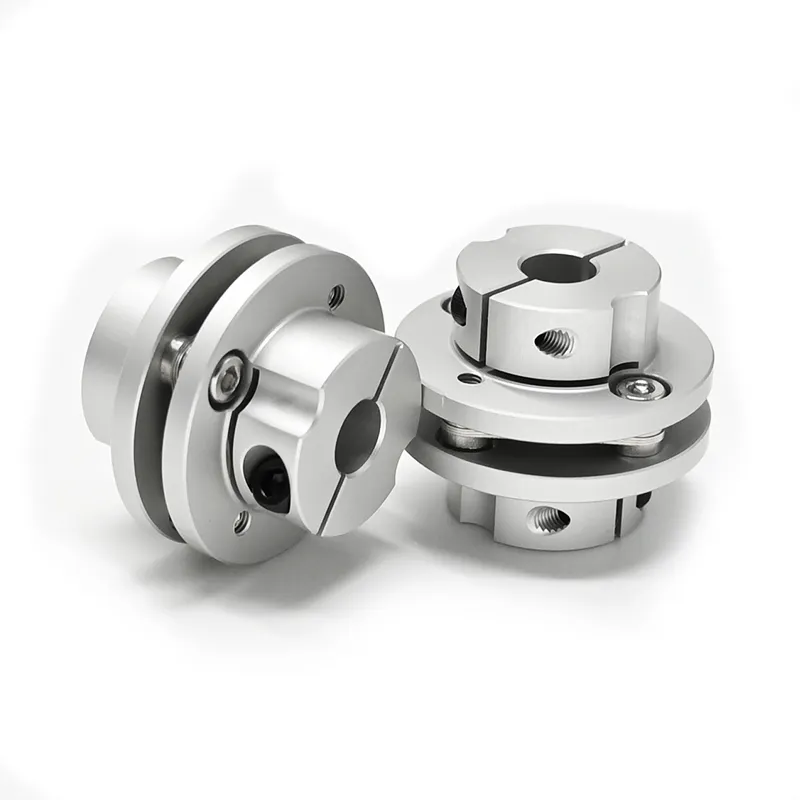
What are the Temperature and Environmental Limitations of Flange Couplings?
Flange couplings, like any mechanical component, have certain temperature and environmental limitations that can impact their performance and lifespan. It’s crucial to understand these limitations to select the appropriate flange coupling for specific applications. Here are the key factors to consider:
1. Temperature: Flange couplings are typically manufactured from materials that can withstand a range of temperatures. The maximum and minimum operating temperatures will depend on the material composition of the coupling. Common materials used for flange couplings, such as steel or stainless steel, can handle a broad temperature range from -40°C to 300°C or higher. However, extreme temperatures beyond the recommended range can cause material degradation, loss of strength, and potential failure of the coupling. In high-temperature applications, specialized materials like heat-resistant alloys may be used to maintain coupling integrity.
2. Corrosive Environments: Flange couplings operating in corrosive environments, such as chemical processing plants or marine applications, should be made from materials that resist corrosion. Stainless steel or other corrosion-resistant alloys are commonly used for such conditions. Regular inspection and maintenance are crucial to monitor the coupling’s condition and protect against premature failure due to corrosion.
3. Hazardous Environments: In certain industries, flange couplings may be exposed to hazardous or explosive atmospheres. In such cases, it’s essential to choose flange couplings that meet relevant safety standards, such as ATEX or IECEx, and are specifically designed and certified for use in hazardous environments.
4. Cleanliness and Hygienic Requirements: Industries such as food processing, pharmaceuticals, and biotechnology have strict hygiene standards. Flange couplings used in these applications should be easy to clean and constructed from materials that meet sanitary requirements to prevent contamination and ensure product purity.
5. Environmental Factors: Flange couplings used in outdoor applications may be exposed to various environmental factors such as moisture, dust, and UV radiation. Choosing couplings with appropriate protective coatings or seals can help enhance their resistance to environmental elements and extend their service life.
Before selecting a flange coupling for a specific application, it’s essential to consider the temperature and environmental conditions it will be exposed to. Consulting with coupling manufacturers or engineers can help ensure that the chosen flange coupling is suitable for the intended operating environment and will deliver reliable performance over its expected lifespan.
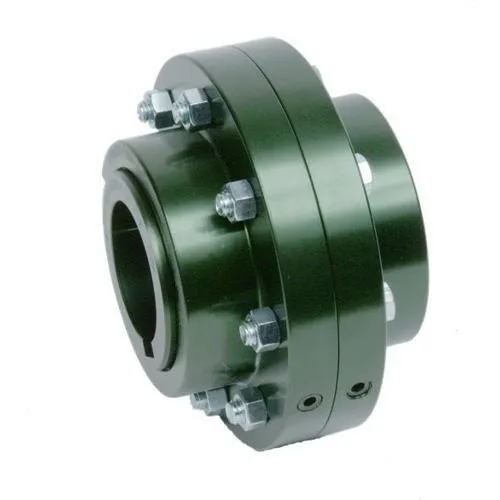
What is a flange coupling and how does it work?
A flange coupling is a type of rigid coupling used to connect two shafts together in a mechanical system. It consists of two flanges, one on each shaft, which are bolted together to form a solid and robust connection. Flange couplings are widely used in applications where precise alignment, high torque transmission, and zero backlash are critical.
The key components of a flange coupling include:
- Flanges: The flanges are circular discs with holes around the perimeter for bolting them to the respective shaft ends. The flanges are made from materials such as steel, cast iron, or aluminum, depending on the application requirements.
- Fasteners: High-strength bolts or studs with nuts are used to fasten the flanges together securely. The number and size of the bolts depend on the size and torque capacity of the coupling.
- Gaskets: In some cases, gaskets or spacers are used between the flanges to provide insulation, prevent corrosion, or compensate for any slight misalignments between the shafts.
How a flange coupling works:
- The two shafts that need to be connected are brought together with their respective flanges facing each other.
- The flanges are aligned precisely to ensure that both shafts are in perfect axial alignment. Proper alignment is essential to prevent excessive loads on the bearings and to ensure efficient torque transmission.
- Once the flanges are aligned, high-strength bolts or studs are inserted through the holes in the flanges, and nuts are fastened tightly to hold the flanges together securely.
- The tight connection between the flanges creates a rigid joint between the shafts, allowing torque to be transmitted from one shaft to the other with minimal losses.
- Flange couplings are designed to have zero backlash, meaning there is no play or free movement between the shafts when the direction of rotation changes. This feature ensures precise and immediate power transmission between the connected shafts.
Flange couplings are commonly used in various industrial applications, including heavy machinery, pumps, compressors, and marine propulsion systems. They are preferred when a reliable, high-torque transmission with precise alignment is required. However, they do not offer flexibility to accommodate misalignment, which is a limitation compared to flexible couplings. Therefore, proper alignment during installation is critical to avoid premature wear and failure of the coupling and connected equipment.


editor by CX 2024-02-19