
Product Description
Hikelok Pipe Fittings- Hex Couplings
Instrumentation Pipe Fittings
Available in sizes from 1/16 to 2 in. and 6mm to 30mm.
Hikelok pipe fittings materials include stainless steel, alloy400/R-405, brass and duplex steel.
Hikelok provides NPT, ISO/BSP, SAE and ISO threads configurations.
Burr-free smooth thread provide optimum sealing and minimize galling.
Materials Standards
| Material | Bar stock | Forgings |
| 316 stainless steel | ASTM A276 ASME SA479, EN 1.4401 | ASTM A182 ASME SA182, EN 1.4401 |
| Alloy 20 | ASTM B473 | ASTM B462 |
| Alloy 400/R-405 | ASTM B164, ASME SB164 | ASTM B564, ASME SB564 |
| Alloy 600 | ASTM B166,ASME SB166 | ASTM B564,ASME SB564 |
| Alloy 625 | ASTM B446 | ASTM B564,ASME SB564 |
| Alloy 825 | ASTM B425 | ASTM B564,ASME SB564 |
| Alloy C-276 | ASTM B574 | ASTM B564 |
| Aluminum | ASTM B211 | ASTM B247 |
| Brass | ASTM B16,ASTM | ASTM B283 |
| Carbon steel | B453 ASTM A108 | — |
Thread Specifications
| Thread Type(End Connection) | Reference Specification |
| NPT | ASME B1.20.1,SAE AS71051 |
ISO/BSP(parallel) (Based on DIN 3852) (Hikelok PPT,BP,and BS fittings) | ISO 228,JIS B5712 |
ISO/BSP(tapered) (Based on DIN 3852) (Hikelok BT fittings) | ISO 7,BS EN 15716-1, JIS B5713 |
ISO/BSP(gauge) (Based on EN 837-1 and 837-3) (Hikelok BG) | ISO 228 |
Unified (SAE) (Hikelok SA fittings) | ASME B1.1 |
Working Temperature Rating
| Material | Working Temperature Rating ºF(ºC) |
| 316 stainless steel | -65(-53) to 1000(537) |
| Brass | -20(-28) to 400(204) |
| Carbon steel | -65(-53) to 375(190) |
| BS gaskets(FKM) | -5(-15) to 400(204) |
| BG BP gaskets(copper) | -5(-15) to 400(204) |
| SAE O-ring (FKM) | -5(-15) to 400(204) |
NPT Thread Pressure Ratings
Ratings are based on ASME Code for Pressure Piping B31.3,
Process Piping, at ambient temperature.
| NPT/ ISO Pipe Size | 316 S.S. and Carbon Steel | Brass | ||||||
| Male | Female | Male | Female | |||||
| psig | bar | psig | bar | psig | bar | psig | bar | |
| 1/16 | 11000 | 760 | 6700 | 460 | 5500 | 380 | 3300 | 230 |
| 1/8 | 10000 | 690 | 6500 | 440 | 5000 | 340 | 3200 | 220 |
| 1/4 | 8000 | 550 | 6600 | 450 | 4000 | 270 | 3300 | 220 |
| 3/8 | 7800 | 540 | 5300 | 360 | 3900 | 270 | 2600 | 180 |
| 1/2 | 7700 | 530 | 4900 | 330 | 3800 | 260 | 2400 | 160 |
| 3/4 | 7300 | 500 | 4600 | 320 | 3600 | 250 | 2300 | 160 |
| 1 | 5300 | 370 | 4400 | 300 | 2600 | 180 | 2200 | 150 |
| 1 1/4 | 6000 | 410 | 5000 | 350 | 3000 | 200 | 2500 | 170 |
| 1 1/2 | 5000 | 340 | 4600 | 310 | 2500 | 170 | 2300 | 150 |
| 2 | 3900 | 270 | 3900 | 270 | 1900 | 130 | 1900 | 130 |
Certifications
Company Introduction
Factory
Our Services
FAQ
| Standard: | ANSI, GB, JIS |
|---|---|
| Material: | Stainless Steel |
| Connection: | Female |
| Head Type: | Hexagon |
| Product Name: | Hex Couplings |
| Body Material: | Stainless Steel |
| Samples: | US$ 2/Piece 1 Piece(Min.Order) | |
|---|
| Customization: | Available | Customized Request |
|---|
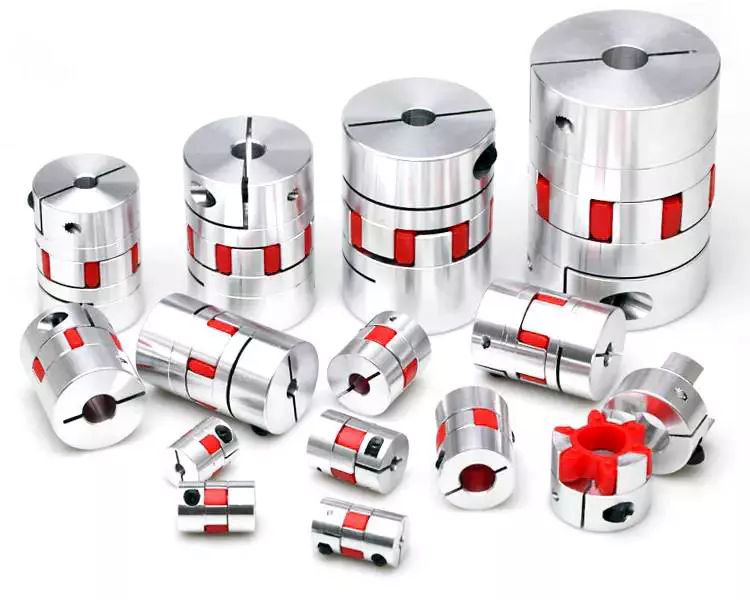
Programming With Couplings
A coupling is a mechanical device that connects two shafts together and transmits power. Its purpose is to join rotating equipment and allows some degree of end-movement or misalignment. There are many different types of couplings. It’s important to choose the right one for your application.
Mechanical connection between two shafts
There are many ways to achieve mechanical connection between two shafts, including the use of a coupling. One common type is the beam coupling, which is also known as a helical coupling. It is used for transmission of torque between two shafts. This type of connection accommodates axial, parallel and angular misalignments.
The hubs and shafts of a worm gear are connected together by a coupling. This mechanical connection allows one shaft to turn another without causing a mechanical failure. This type of coupling is made from sliding or rubbing parts to transfer torque. However, the coupling is not designed to withstand jerks, so it isn’t suitable for high-speed applications.
The use of a coupling is common in machinery and equipment. It helps transmit power from one drive shaft to the other, while adding mechanical flexibility. It is also useful for reducing the impact and vibration caused by misalignment. It also protects the drive shaft components from wear and tear.
A double-hook coupling can be used to provide a uniform angular velocity at the driven shaft. Another example is a double-jointed coupling. A double-jointed coupling can be used to connect shafts that are not directly intersecting. The double-jointed yoke can be used for the same purpose.
A shaft coupling is a device that maintains a strong mechanical connection between two shafts. It transfers motion from one shaft to another, at all loads and misalignments. Unlike a conventional linkage, a shaft coupling isn’t designed to allow relative motion between the two shafts. Couplings often serve several purposes in a machine, but their primary use is torque and power transmission.
Functions that control the flow of another function
One of the simplest programming constructs is a function that controls the flow of another function. A function can take an argument and return a different value, but it must be ready to return before it can pass that value to another function. To do this, you can use the goto statement and the if statement. Another way to control flow is to use a conditional statement.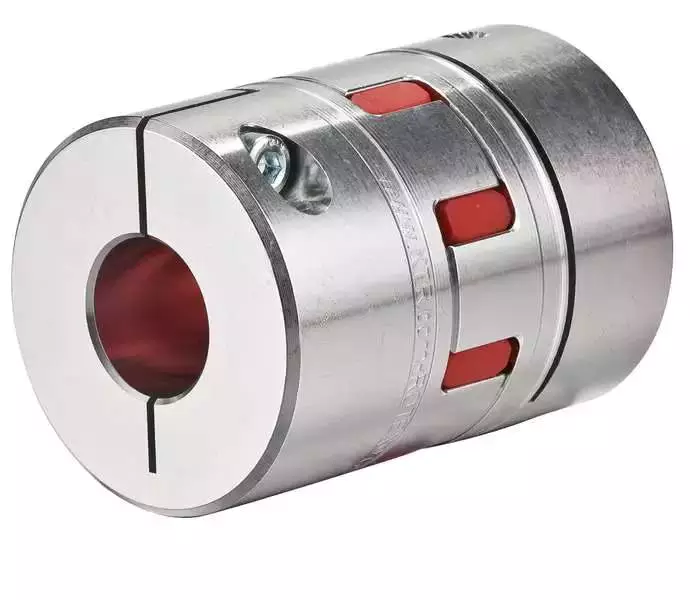
Criteria for selecting a coupling
There are several important factors to consider when choosing the right coupling. One of the most important factors is coupling stiffness, which depends on the material used and the shape. The stiffness of a coupling determines its ability to resist elastic deformation. A stiff coupling is desirable for certain types of applications, but it’s undesirable for others. Stiffness can reduce the performance of a system if there’s too much inertia. To avoid this, ensure that the coupling you choose is within the recommended limits.
The size of a coupling is also important. Different coupling types can accommodate different shaft sizes and shapes. Some couplings have special features, such as braking and shear pin protection. When choosing a coupling, you should also consider the type of driven equipment. If you need to connect a high-torque motor, for example, you’ll want to choose a gear coupling. Likewise, a high-speed machine may require a disc coupling.
Another factor to consider when selecting a coupling is the torque rating. Despite its importance, it’s often underestimated. The torque rating is defined as the torque of the coupling divided by its OD. In some cases, torque may fluctuate during a cycle, requiring a coupling with a higher torque rating.
Torsionally flexible couplings are also important to consider. Their design should be able to withstand the torque required during operation, as well as the required speed. The coupling should also have a high degree of torsional stiffness, as well as damping. Furthermore, a damping coupling can reduce the energy wasted through vibration.
The sizing of a coupling is also determined by the torque. Many engineers use torque to select the correct coupling size, but they also take into consideration torsional flexibility and torsional stiffness. For example, a shaft may be able to handle large torque without damaging the coupling, while a disk may be unable to handle large amounts of torque.
Besides torque, another important consideration in coupling selection is the cost. While a coupling may be cheaper, it may be less reliable or easier to maintain. Couplings that are difficult to service may not last as long. They may also require frequent maintenance. If that’s the case, consider purchasing a coupling with a low service factor.
There are many different types of couplings. Some require additional lubrication throughout their lifetime, while others are 100% lubrication-free. An example of a 100% lubrication-free coupling is the RBI flexible coupling from CZPT. This type of coupling can significantly reduce your total cost of ownership.
In addition to the above-mentioned benefits, elastomeric couplings are low-cost and need little maintenance. While they are often cheaper than metallic couplings, they also have excellent shock absorption and vibration dampening properties. However, they are susceptible to high temperatures. Also, they are difficult to balance as an assembly, and have limited overload torque capacity.

editor by CX 2023-05-17